

How Plum Gas Solutions Unlocks Value Through Condensate Recovery
What Is Natural Gas Condensate?
Natural gas condensate is a light hydrocarbon liquid that forms when raw natural gas is cooled or pressure is reduced, causing heavier hydrocarbons to drop out of the gas stream.
These liquids—often referred to as condensate or natural gasoline—are composed of valuable hydrocarbons such as pentane and heavier compounds, which can be stored, transported, and sold similarly to crude oil products.
In many field environments, this condensate is already present within “wet gas”—it simply needs to be properly captured and separated.
The Missed Opportunity in Field Operations
Without proper gas conditioning and separation:
- Condensate remains in the gas stream or is lost
- Operators focus only on fuel use, not byproduct recovery
- Valuable hydrocarbons are effectively left on the table
At scale, this represents a significant missed opportunity—especially in high-volume operations where gas throughput is substantial. Plum’s conditioning and separation systems help operators recover that value instead of letting it go unused.
How Plum Gas Solutions Captures Condensate
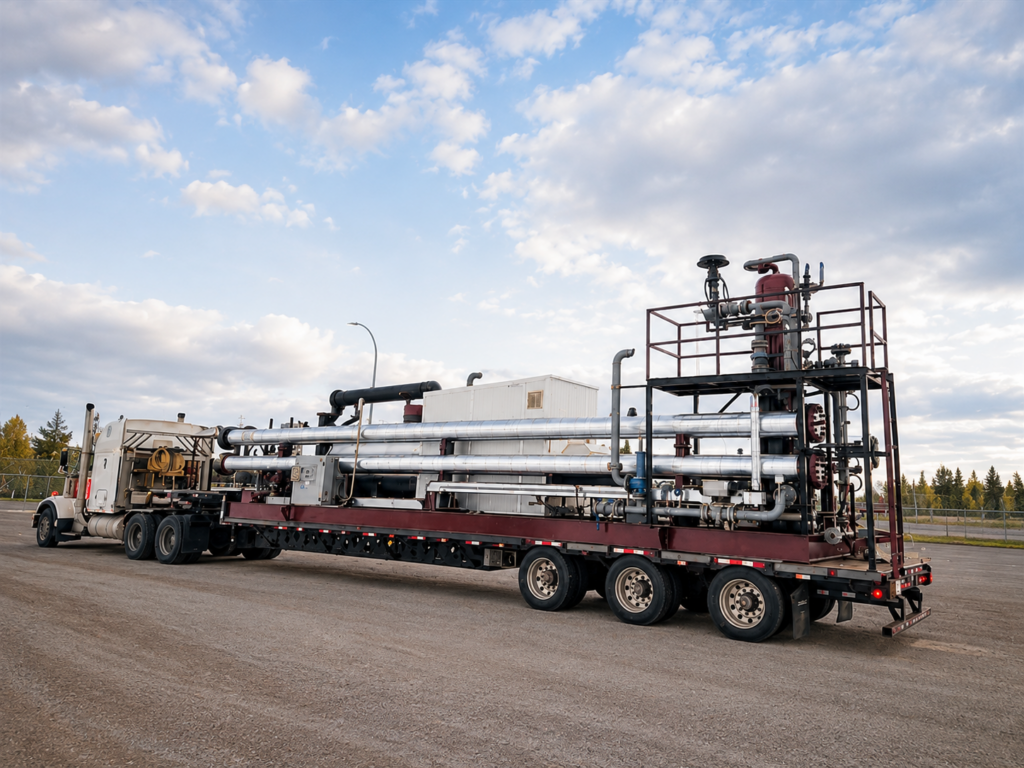
Plum Gas Solutions integrates condensate recovery directly into its field gas conditioning and delivery systems.
Step one is gas conditioning.
Plum conditions raw or associated gas by removing impurities and stabilizing composition, controlling pressure and temperature, and separating heavier hydrocarbons from the gas stream
This ensures the gas is both fuel-ready and optimized for liquid recovery.
Step two is condensate separation.
As part of the conditioning process, heavier hydrocarbons naturally condense into liquid form. These liquids are captured and stored as field condensate (measured in barrels), and recovery rates vary based on gas composition but can be material at scale
Step three is monetization.
Once captured, condensate becomes a sellable commodity. It is typically priced per barrel, similar to light crude products. It can be transported and sold into existing markets, creating a direct revenue stream from a previously unused resource.
The Plum Advantage: Fuel + Revenue
Most providers focus only on delivering fuel. Plum goes further by maximizing the total value of the gas stream. This approach carries significant benefits for the company’s customers.
It supports dual-value creation, allowing operators to use the gas to power operations while capturing condensate to generate revenue.
Plum improves project economics—because hydrocarbons are generally more valuable in liquid form than gas, capturing condensate improves overall return on fuel utilization.
Waste is reduced, including less flaring or underutilized gas, more efficient use of existing resources, and supporting a stronger environmental and operational profile.
And, finally, Plum allows for more integrated system design, by combining field gas conditioning, pressure reduction systems, compression and flow management, and SCADA-enabled monitoring.
Altogether, Plum’s unique approach and technology ensures both consistent fuel delivery and optimized condensate recovery.
From Cost Center to Revenue Stream
Condensate is often treated as a secondary outcome of natural gas operations.
Plum Gas Solutions turns it into a strategic advantage.
By capturing and enabling the sale of condensate, Plum helps customers:
- Reduce diesel and fuel costs
- Unlock new revenue streams
- Maximize the value of every unit of gas
The result is a smarter energy model—where fuel supply doesn’t just power operations, it also generates profit.
Waste is reduced, including less flaring or underutilized gas, more efficient use of existing resources, and supporting a stronger environmental and operational profile.
And, finally, Plum allows for more integrated system design, by combining field gas conditioning, pressure reduction systems, compression and flow management, and SCADA-enabled monitoring.
Altogether, Plum’s unique approach and technology ensures both consistent fuel delivery and optimized condensate recovery.